
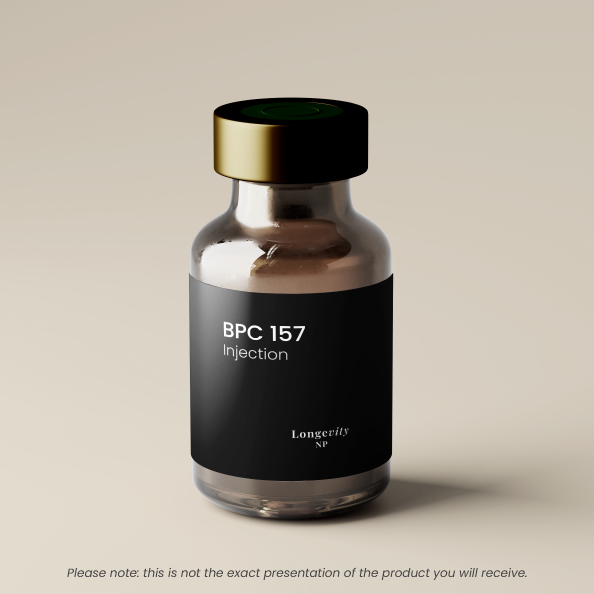
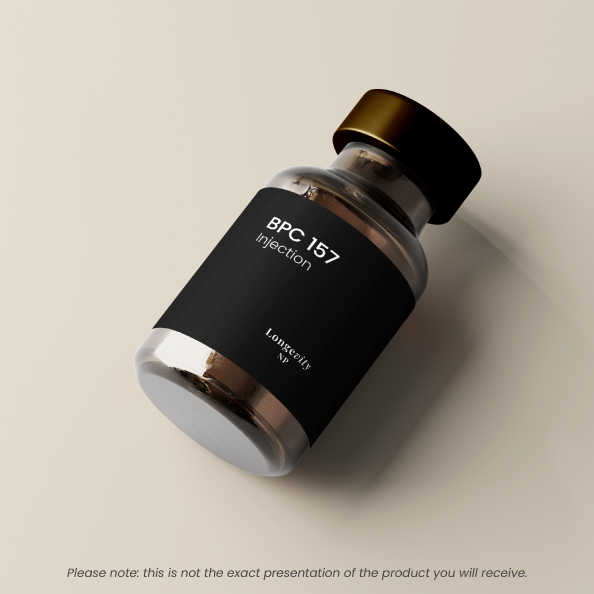
BPC 157
$339.00
BPC‑157, short for Body Protection Compound‑157, is a synthetic 15‑amino‑acid peptide derived from gastric juice. Read more
** Must be a current client to purchase.
Please register or login.
BPC-157 is not FDA-approved and is considered an unapproved drug. Safety and effectiveness in humans have not been rigorously evaluated. It’s often available only under research labels or through compounding.
Human data is sparse. Potential risks include unintended stimulation of angiogenesis pathways, especially in those with cancer risks. As with any peptide, product purity and quality vary widely.
How Do I Administer BPC 157?
- Delivered via subcutaneous or intra‑articular injection, depending on treatment goals
- Often used by athletes or patients with localized injury (e.g., injected directly into a painful joint). More info
- Dosages and protocols are highly individualized and typically guided by specialist clinics or trained providers.

Why Consider BPC-157 Peptide Therapy?

The Science Behind BPC 157
Extensive preclinical research shows BPC‑157 promotes healing by:
- Boosting angiogenesis and growth factor signaling
- Enhancing fibroblast activity and extracellular matrix regeneration
- Mitigating oxidative and inflammatory damage
- Activating healing pathways such as FAK–paxillin signaling More info
However, clinical data remains limited, and no large-scale human trials have confirmed safety or efficacy. The peptide is not FDA-approved and is categorized as an unapproved drug. It’s currently listed as prohibited by WADA and may be labeled as “for research only” More Info
What is BPC‑157?
BPC‑157, short for Body Protection Compound‑157, is a synthetic 15‑amino‑acid peptide derived from gastric juice. It is gaining attention for its potential healing and regenerative properties in tissues including muscle, tendon, ligament, bone, and gastrointestinal structures. More info
Safety & Regulatory Considerations
- Human clinical trials are scarce; preclinical safety data in animals is promising, but human safety remains unestablished. More info
- Potential risks: promotes angiogenesis and cell migration pathways (e.g., FAK-paxillin), which theoretically could support tumor growth or metastasis. More info
- Not FDA-approved — often sold as “research chemicals” or “for lab use only”. More info
- Users and clinicians express caution, recommending independent testingof products and noting the absence of regulatory oversight. More info

Frequently Asked Questions
Is BPC-157 legal and safe?
BPC-157 is not FDA-approved and is considered an unapproved drug. Safety and effectiveness in humans have not been rigorously evaluated. It’s often available only under research labels or through compounding.
What conditions might benefit from BPC-157?
Animal studies suggest benefits for injuries to tendons, ligaments, muscles, the GI tract, and even neuroprotective effects. Human evidence is limited to small, uncontrolled observations.
How quickly might effects be noticeable?
Anecdotal reports and limited studies suggest relief or healing improvements within days to weeks, particularly for musculoskeletal issues.
Are there any risks or side effects?
Human data is sparse. Potential risks include unintended stimulation of angiogenesis pathways, especially in those with cancer risks. As with any peptide, product purity and quality vary widely.